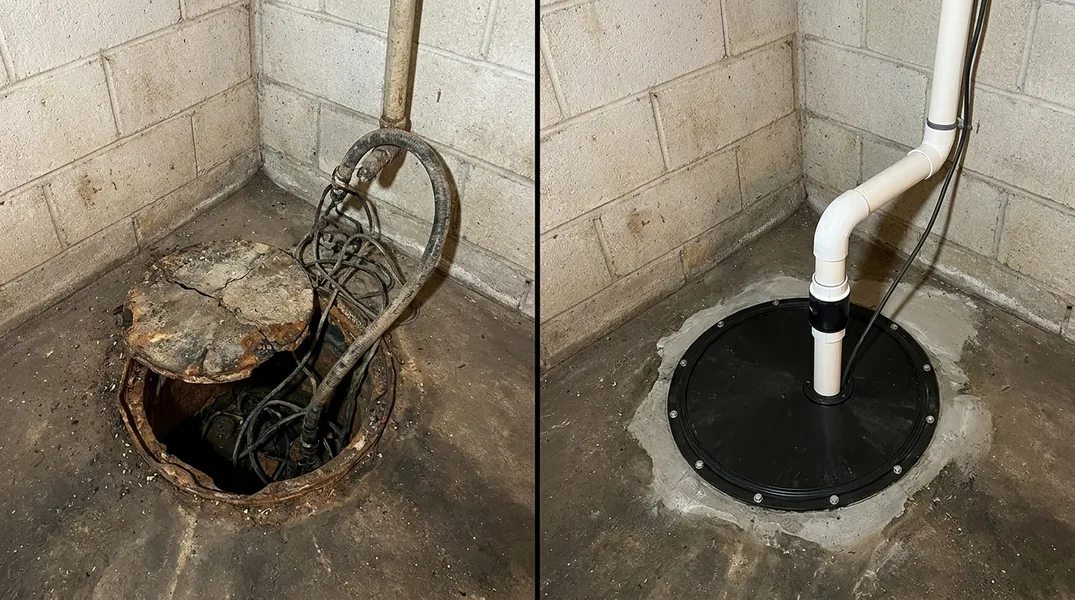
Why Spring Storms Put Your Sump Pump to the Test
Central Illinois weather can turn on a dime, and spring is the most unpredictable season of all. In Decatur, March and April often bring heavy rain events that saturate the soil around your foundation in a matter of hours. When the ground can't absorb any more water, that excess has to go somewhere, and all too often it finds its way into basements and crawl spaces. Your sump pump is the first line of defense against that intrusion, but it can only do its job if it's been properly maintained.
Many homeowners don't think about their sump pump until they hear it running constantly or, worse, until they find standing water on the floor. The reality is that a pump sitting idle for months can develop sticky switches, clogged intakes, or corroded connections. Before the first big storm rolls through, it's worth taking an afternoon to inspect your system or calling in a professional from Decatur Waterproofing to make sure everything is in working order.
Sump Pump Maintenance Checklist for Homeowners
Start by unplugging the pump and removing the lid from the sump pit. Look for debris, silt, or gravel that may have collected around the float and intake screen. A clogged intake is one of the most common reasons a pump fails during a storm, and it's usually easy to fix with a gloved hand and a bucket. While the pit is open, check the float to make sure it moves freely and isn't tangled in the power cord or stuck against the pit wall. Once everything looks clear, plug the pump back in and slowly pour a bucket of water into the pit to trigger the float. The pump should kick on quickly and drain the water without unusual noises or vibrations.
Next, inspect the discharge pipe and the sump pump check valve. The check valve keeps water from flowing back into the pit after the pump shuts off, and a faulty valve can cause the pump to cycle repeatedly or fail altogether. Make sure the valve is installed correctly and isn't clogged with mineral buildup. Also check that the discharge line outside your home is clear of leaves and doesn't terminate too close to the foundation, since water that dumps right back against the house will simply find its way inside again. If you notice any cracks in the pipe or loose fittings, replace them before storm season arrives.
The Case for a Battery Backup Sump Pump
Spring storms in Central Illinois frequently knock out power, and that's exactly when your sump pump is needed most. A standard pump that relies on household electricity will stop working the moment the lights go out, leaving your basement vulnerable to flooding during the heaviest rain. A battery backup sump pump solves that problem by running on a charged battery when the primary power source fails. It's a relatively small investment that can save thousands of dollars in water damage, ruined belongings, and mold remediation.
If you already have a backup system, test it before storm season by unplugging the main pump and running the backup with water. Check the battery terminals for corrosion and confirm the charge indicator shows a full battery. Most backup batteries last three to five years, so if yours is older than that, it may be time for a replacement. Homeowners in Mount Zion and Forsyth face the same power reliability concerns, and a backup pump is one of the smartest upgrades you can make for peace of mind.
When Maintenance Isn't Enough: Signs You Need a Pro
Sometimes a sump pump is working fine but still can't keep up with the volume of water entering your basement. If you notice the pump running constantly during storms, water pooling in areas the pump can't reach, or dampness along the base of your walls, the issue may be bigger than a maintenance problem. Your Basement Waterproofing system may need an upgrade, such as an Interior Drain Tile System that directs water to the pit more efficiently. In some cases, the source of the problem is outside the home, and Exterior Basement Waterproofing or Foundation Waterproofing is the better long-term solution.
If you're unsure whether your pump is up to the task, a professional inspection can give you a clear answer. Decatur Waterproofing serves homeowners throughout the area, including Long Creek, and can evaluate your sump pump, check valve, and backup system in a single visit. Call (217) 859-8629 to schedule a free estimate and get ahead of spring storm season before the first downpour arrives.
Sump Pump Maintenance Near Me: Scheduling Your Spring Tune-Up
If you'd rather leave the work to a professional, scheduling a spring tune-up is a smart move. A technician will test the pump under load, inspect the check valve, clean the pit, verify the discharge line, and confirm your backup battery is holding a charge. This kind of service typically takes less than an hour and can uncover small problems before they turn into costly spring storm basement flooding. It's especially worthwhile if your pump is more than five years old or if you've never had it serviced since installation.
Don't wait until the forecast shows a week of rain to think about your sump pump. Spring storms in Central Illinois are unpredictable, and the best time to prepare is now. Whether you need a simple maintenance visit or a full evaluation of your waterproofing system, Decatur Waterproofing is here to help. Reach out for pricing details or to ask about scheduling, and take the first step toward a dry basement this spring.
Looking for a professional basement waterproofing contractor in Decatur? Decatur Waterproofing responds fast for all your basement waterproofing needs.
Get a Free QuoteOur services: Basement Waterproofing · Interior Drain Tile System · Exterior Basement Waterproofing