Why Historic Brick and Limestone Basements Leak
If you own a home in one of Decatur's older neighborhoods, you already know the charm of original brick and limestone foundations. You may also know the frustration of a damp basement after every heavy rain. These materials were built to last, but they were not designed with modern drainage in mind. Lime mortar, which was standard in Victorian-era construction, is soft and breathable. It allows moisture to move through the wall, which is actually a good thing when the mortar is intact. The problem starts when that mortar erodes or when exterior water pressure builds up against the foundation.
Limestone is porous by nature. Over decades, it absorbs water from saturated soil and releases it inward. Brick foundations behave similarly, especially when the exterior parging has cracked or fallen away. Many old homes also lack a proper footing drain, so groundwater has nowhere to go but against the basement wall. When you combine aging materials with modern landscaping that slopes toward the house, you get the classic old foundation leak that so many historic homeowners face. Understanding this dynamic is the first step toward a lasting fix.
Signs Your Old Foundation Needs Attention
Not every damp spot means a crisis, but some warning signs should never be ignored. White, chalky deposits on the wall (efflorescence) indicate that water is moving through the masonry and leaving salts behind. Spalling brick or flaking limestone faces suggest freeze-thaw damage, which worsens every winter. You may also notice a musty smell, rusted appliance feet, or paint peeling off the lower block. In a Victorian home basement, these clues often point to a combination of exterior water pressure and interior humidity.
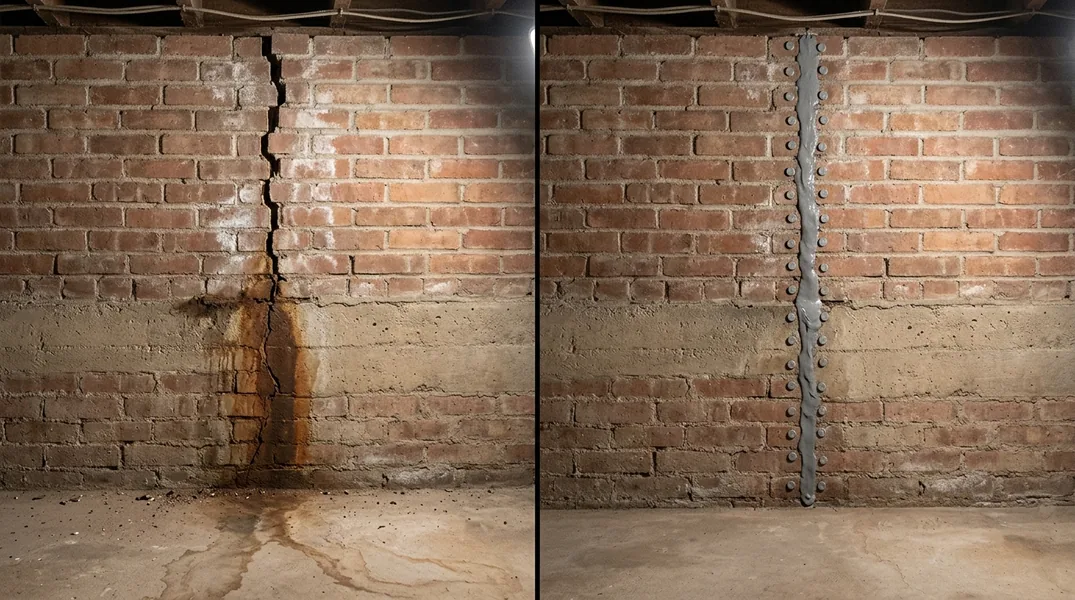
Structural symptoms deserve prompt attention. Horizontal cracks in a brick foundation, bowing walls, or doors that suddenly stick can signal soil pressure that has exceeded what the old mortar can handle. A single vertical hairline crack may be cosmetic, but stair-step cracking near corners usually means movement. If you see any of these, schedule a free estimate before the next rainy season. Catching an old foundation leak early almost always saves money and preserves the historic character of your home.
Repointing and Limestone Foundation Repair Done Right
Foundation repointing is one of the most important preservation techniques for historic masonry. Repointing means removing deteriorated mortar from the joints and replacing it with a compatible mix. The key word is compatible. Modern Portland cement mortar is harder than the old brick and limestone around it. If you tuck-point with a hard mortar, the masonry will crack instead of the joint, which accelerates damage. A proper repointing job uses a lime-rich mortar that matches the original in strength, texture, and color. This is slow, careful work, but it is the difference between a repair that lasts decades and one that fails in a few years.
Limestone foundation repair also involves addressing cracks and spalls with materials that bond without trapping moisture. Some cracks should be injected with flexible sealants, while larger voids may need mortar patching or stone replacement. At Decatur Waterproofing, we evaluate the masonry first and then design a Foundation Waterproofing plan that respects the building's age. We never recommend coating a historic wall with a waterproof paint or cement parge that seals the surface and traps water inside. Breathability matters as much as water resistance when you are dealing with old brick and limestone.
Waterproofing Options for Victorian Home Basements
Once the masonry is stabilized, you have several ways to keep the basement dry. Basement Waterproofing for historic homes usually starts with managing exterior water. Grading the soil away from the foundation, extending downspouts, and repairing gutters can reduce hydrostatic pressure dramatically. When that is not enough, an Interior Drain Tile System captures water at the base of the wall and directs it to a sump pump. This approach is often preferred in older homes because it avoids excavating around delicate foundations and historic landscaping.
In some cases, Exterior Basement Waterproofing is the better long-term solution, especially when the exterior parging has failed or when the foundation is bowing. Exterior work involves excavating down to the footing, repairing the wall, and installing drainage and a waterproof membrane. It is more invasive, but it addresses the source of the pressure directly. A good contractor will explain both options honestly and recommend the one that fits your home, your budget, and your tolerance for disruption.
Basement Waterproofing Near Me: When to Call a Pro
Some homeowners in Mount Zion and Forsyth can handle minor grading and downspout fixes on their own. But historic masonry is not a DIY project. Aggressive cleaning, wrong mortar, or a poorly placed sump pump can cause more harm than good. If your basement smells musty year-round, if water pools against the foundation after storms, or if you see efflorescence spreading, it is time to bring in a professional. A contractor who specializes in historic home basement waterproofing will know how to test for moisture, inspect the mortar joints, and recommend a plan that protects the building's integrity.
When you search for basement waterproofing near me, look for a company that talks about breathability, lime mortar, and drainage rather than just selling a one-size-fits-all sealant. Ask how they handle historic masonry and whether they use interior or exterior systems. Decatur Waterproofing serves homeowners throughout the area, including Long Creek, and we are happy to walk you through your options. Call (217) 859-8629 to schedule a free estimate and get honest answers about what your old foundation really needs.
Looking for a professional basement waterproofing contractor in Decatur? Decatur Waterproofing responds fast for all your basement waterproofing needs.
Get a Free QuoteOur services: Basement Waterproofing · Interior Drain Tile System · Exterior Basement Waterproofing