The Soil Under Your Feet: Why Decatur Basements Fight a Losing Battle
If you own a home in Decatur, you already know something about the ground here that outsiders do not. The top layer looks rich and dark, almost like garden soil, and in many yards it is. That black prairie soil is one of the reasons this part of Illinois has been farmed so intensively for generations. But dig down a few feet and the story changes fast. Beneath that fertile topsoil sits a dense, heavy clay that behaves less like dirt and more like a lid on a pot.
This combination of black prairie soil over clay is the single biggest reason Macon County basements take on water. The prairie soil absorbs rainfall quickly, which feels helpful until you realize where that water goes next. It drains down until it hits the clay layer, and then it stops. Clay particles are tiny and tightly packed, so water moves through them extremely slowly. During a wet spring or after a heavy summer storm, the soil above the clay becomes saturated, and the water has nowhere to go but sideways and down, often right against your foundation walls.
How Decatur Clay Soil Turns a Wet Yard Into a Wet Basement
Homeowners often call us after a storm and say the basement was dry for years and then suddenly was not. That pattern makes sense once you understand Decatur clay soil. Clay does not just block water; it also expands when it absorbs moisture and shrinks when it dries out. Over the seasons, that swelling and shrinking cycle puts steady pressure on foundation walls. Hairline cracks that formed during a dry summer can open up just enough during a wet fall to let water seep through.
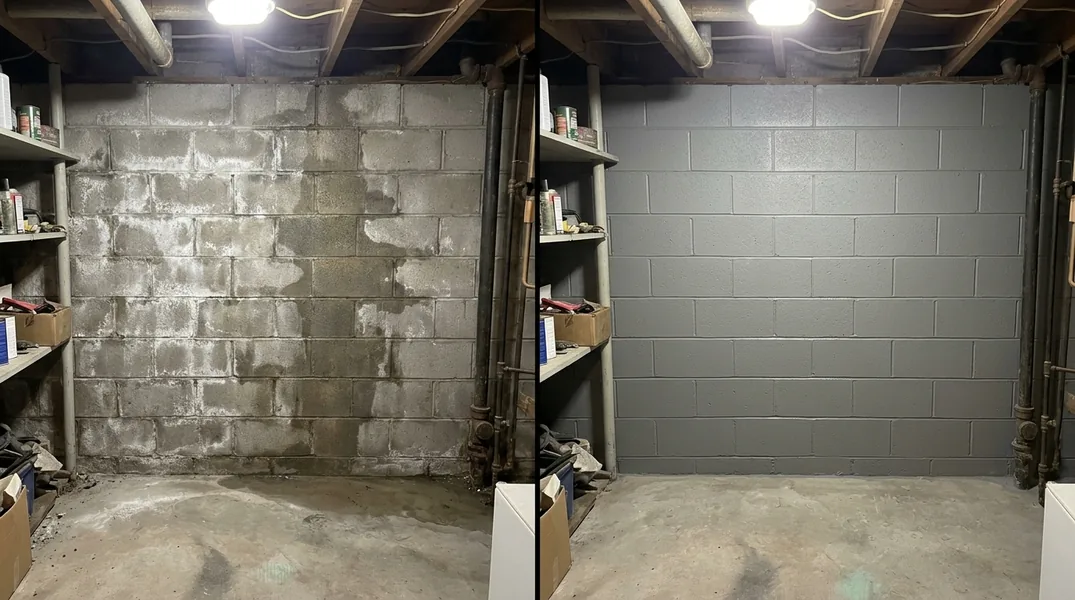
There is also the issue of hydrostatic pressure. When saturated soil presses against a foundation, water is essentially pushed through any available opening, including the porous concrete itself. Many older homes in the area were built with block or poured walls that were never designed to handle this kind of constant moisture load. That is why a basement can smell musty for years before a visible puddle ever appears. The moisture is already there, quietly moving through the concrete and evaporating into the air. If you have noticed that smell or seen white powdery deposits on your walls, it is worth getting a professional assessment before the problem grows.
The High Water Table Basement Problem in Macon County
Macon County basement leaks are not only about rain hitting the walls. In many parts of the county, the water table sits relatively high, especially near creeks and low-lying areas around Long Creek and the surrounding countryside. When the water table rises after a wet season, groundwater can actually push up from below your basement floor. This is why some homeowners see water appearing in the middle of the floor rather than along the walls, which can be confusing if you have never dealt with it before.
A high water table basement situation requires a different approach than simple wall seepage. Surface grading and gutter extensions help with roof water, but they do nothing about groundwater rising under the slab. In these cases, an Interior Drain Tile System is often the most reliable solution because it captures water at the point where it enters and routes it to a sump pump before it can spread across the floor. Every home is different, though, and the right fix depends on where the water is actually coming from.
Soil Drainage and the Grading Mistakes We See Every Week
Soil drainage around a home matters more than most people realize. We routinely visit properties in Mount Zion and Forsyth where the ground has settled against the foundation over the years, creating a slope that sends water toward the house instead of away from it. Add a downspout that discharges right next to the wall, and you have created a small river aimed at your basement every time it rains. Fixing grading and extending downspouts is inexpensive and can solve a surprising number of minor seepage issues.
However, grading alone cannot overcome the clay layer. Once water reaches the clay, it will still sit there, and if your foundation has any weakness at all, it will find it. This is why we recommend a full Foundation Waterproofing evaluation rather than piecemeal fixes. A proper assessment looks at the soil, the grading, the foundation condition, and the drainage all together, because in this part of Illinois those factors are deeply connected. Treating one without the others usually means the problem comes back.
Basement Waterproofing Near Me: When to Call a Pro in Decatur
Some homeowners can manage minor dampness with a dehumidifier and better grading, and that is fine. But there are clear signals that it is time to call a professional. Standing water after storms, efflorescence on the walls, a persistent musty odor, cracks that seem to be widening, or any sign of water coming up through the floor are all reasons to get an expert opinion. Waiting usually makes things worse, because prolonged moisture damages framing, insulation, and stored belongings, and it can lead to mold that is far more expensive to address than the original leak.
At Decatur Waterproofing, we start with a thorough inspection and explain what we find in plain language. Depending on the situation, the solution might involve Basement Waterproofing from the inside, Exterior Basement Waterproofing, or a combination of drainage improvements and foundation repair. We serve homeowners throughout Decatur and the surrounding communities, and we are happy to walk you through your options. You can reach us at (217) 859-8629 or request a free estimate to get started.
What Waterproofing Costs in Decatur and How to Plan for It
Cost is the question every homeowner asks, and it is a fair one. Basement waterproofing pricing in Decatur depends on several factors: the size of your basement, the source of the water, whether the fix is interior or exterior, and whether any structural repair is needed. A simple interior drain tile installation is typically far less expensive than a full exterior excavation, and the right choice depends on your specific situation rather than on a one-size-fits-all package.
We believe in transparent estimates with no surprises, which is why we explain exactly what is included before any work begins. It also helps to think about waterproofing as protection for your largest investment. A dry basement adds usable living space, protects your belongings, and prevents the kind of hidden moisture damage that can quietly reduce your home's value. If you are unsure where to start, call (217) 859-8629 and we will help you understand your options and what to budget for your home.
Looking for a professional basement waterproofing contractor in Decatur? Decatur Waterproofing responds fast for all your basement waterproofing needs.
Get a Free QuoteOur services: Basement Waterproofing · Interior Drain Tile System · Exterior Basement Waterproofing